
Understanding "Spring Fatigue" on the Mongolian Steppe

The Morning Dew and the Earth's Breath.
In the Western world, spring is often synonymous with a sudden burst of energy and blooming flowers. But in the heart of Mongolia, spring arrives with a much heavier, more complex character. It is a season of profound transition, a biological and energetic "reset" that tests the limits of both humans and animals.
At Jamogrand Travel, we believe that understanding these invisible rhythms of the steppe is what turns a trip into a journey of the soul. Here is the story of Khavryn Yadargaa—the Mongolian Spring Fatigue.
The Mystery of the "Earth’s Breath"
If you visit the Mongolian countryside in late March or April, you might notice a thin, shimmering mist rising from the soil as the sun warms the horizon. Nomads call this the "Earth's Breath."
After months of being locked in a −40°C deep freeze, the ground begins to thaw. However, because the deeper layers of soil remain frozen solid while the surface warms, a vertical temperature clash occurs. This releases a damp, heavy "steam" or gas from the earth.
According to nomadic tradition, this steam carries the stagnant energy of winter. Breathing this heavy air is said to cause Nozoorol - a unique state of lethargy where limbs feel heavy, the head feels foggy, and a deep sleepiness settles into the spirit. It is the earth itself asking you to slow down.
The "Season of Emptiness"
Spring in Mongolia is often called the "Empty Season." This isn't just a poetic name; it's a biological reality.
Nutritional Depletion: By the time the snow melts, both herders and their livestock have exhausted their internal reserves. The animals have spent their fat stores just to stay warm, and the grass beneath the snow is "yellow", dry and devoid of nutrition.
The Hormonal Shift: Science supports the nomad's wisdom. As daylight rapidly increases, the human body undergoes a massive hormonal shift, recalibrating levels of Serotonin and Melatonin. This "re-tuning" of our internal clock takes about four weeks and is physically draining.
A Fragile Balance for the "Five Snouts"
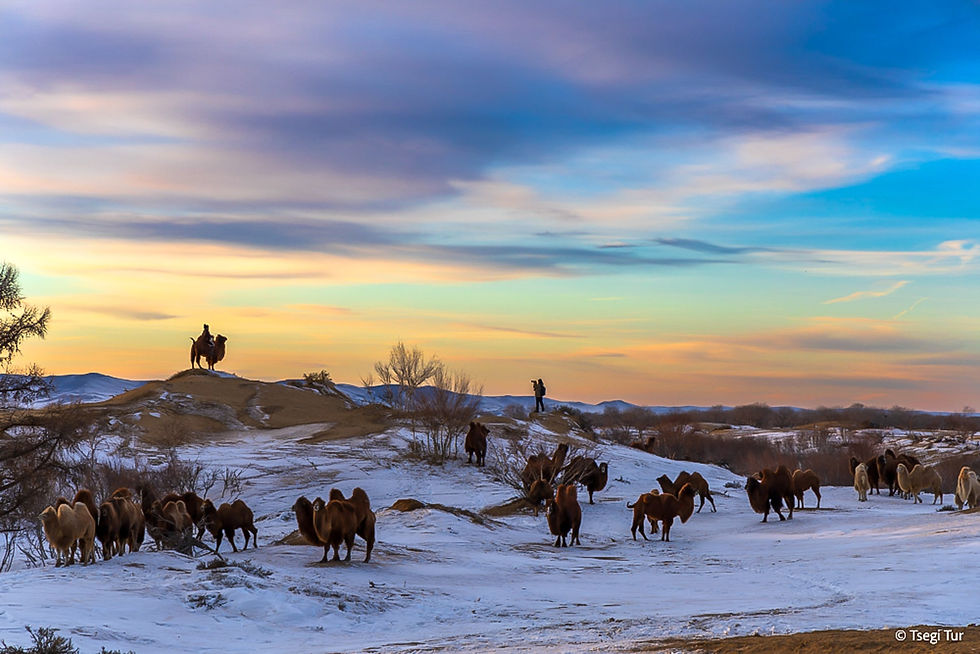
The "tiredness" seen in the herds during spring migration is a sign of their incredible resilience. This is the Survival Gap: the animals are at their weakest point exactly when they are expected to give birth to the next generation and travel miles to new pastures.
Fluctuations in atmospheric pressure during Mongolian spring storms also create cardiovascular stress for weakened livestock. If you see a baby camel or a foal looking "dazed" or moving slowly, you are witnessing an animal navigating a high-stakes battle for survival.
Nomadic Wisdom: How to Fight the Fatigue
Centuries of life on the steppe have taught the Mongolians how to counteract this seasonal weakness. Their remedies are a blend of diet and lifestyle:
The Three Red Foods: To rebuild blood and energy, herders prioritize "red foods" (fresh meat) and Khyaram, a traditional drink of water, milk, and salt designed to restore essential minerals.
The "Rule of Clothing": A common Mongolian proverb warns: "Don't take off your winter clothes until the soil is fully dry." They believe the cold spring wind can enter the bones specifically when the ground is steaming, leading to long-term aches.
The Sacred Nap: During early spring, short naps are not seen as a sign of laziness, but as a cultural necessity to allow the body to adjust to the changing atmosphere.
Seeing the Steppe with New Eyes
When you travel with WellspringVoyage tour operator and witness a nomadic caravan moving slowly across the golden horizon, know that you aren't just seeing a relocation. You are witnessing a feat of endurance. The slow pace is a sign of respect for the environment and the body's limits. It is a beautiful, weary dance of survival - a reminder that in Mongolia, life doesn't just happen; it is earned.
Experience the authentic rhythm of nomadic life. Join Jamogrand Travel for a journey through the seasons.


Comments