
Why is Tsagaan Sar- Lunar New Year- central to Nomadic Identity?

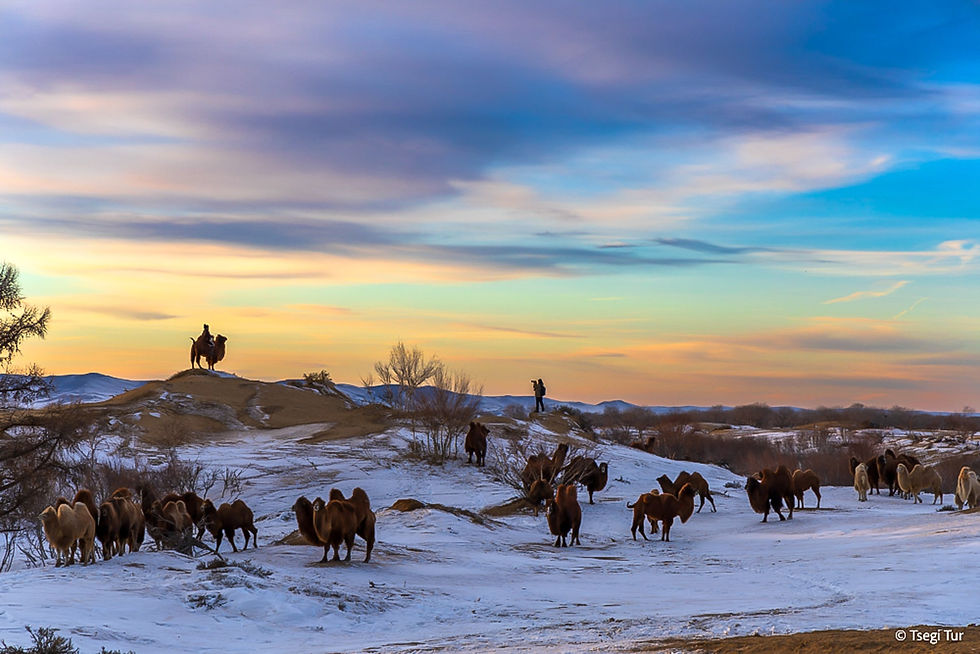
Experience a new culture, feel the Mongolian aesthetic, and charge your soul, leaving your spirit deeply uplifted and restored. Stepping onto the vast, snow-swept steppes during winter offers a rare chance to break free from the noise of modern life and experience a way of living anchored in resilience, hospitality, and tradition.
To understand why Tsagaan Sar holds such profound emotional weight, one must look to nomadic history:
Survival and Gratitude: Herding families historically lived in isolation across immense distances through sub-zero winters. Tsagaan Sar served as the essential reunion to confirm everyone had survived the frost and to count livestock.
Reverence for Elders: Respect for the older generation is paramount. Every greeting, seat at the table, and toast explicitly honors the wisdom and lifespan of elders.
Lineage and Community: Families travel hundreds of miles to visit their eldest relatives, using these reunions to trace lineages, pass down oral histories, and teach younger generations their ancestral roots.
The celebration unfolds through a series of deeply symbolic ceremonies and traditions:
Bituun (The Eve of the New Moon): Families gather for a full-belly feast, believing that sleeping hungry portends a year of scarcity. Outside the ger, three chunks of ice are set near the doorway as a drink offering for the horse of the deity Palden Lhamo.
The First Sunrise (Shiniin Negen): At dawn on the new year's first morning, family members dress in their finest silk Deels and climb nearby sacred cairns (Ovoo) to watch the sunrise, offering milk tea to nature spirits for peace and good health.
Zolgolt (The Sacred Greeting): A younger person extends both arms, palms up, to cradle an elder’s elbows from underneath-symbolizing lifelong support-while exchanging the phrase "Amar baina uu?" ("Are you living peacefully?").
The Festive Table (Idee): Homes set out ceremonial spreads featuring Kheviin Boov (stamped pastry blocks stacked in odd-numbered layers of 3, 5, or 7 to represent life's stages), Uuts (a boiled whole sheep's back signifying prosperity), and thousands of hand-folded buuz (steamed mutton dumplings).
Navigating the holiday requires following key cultural etiquette:
Spouses Do Not Perform Zolgolt: Married couples are traditionally considered a single entity, making the formal greeting between them unnecessary.
Receiving Items: Food, tea, and gifts must always be received with both hands or with the right hand supported by the left elbow.
Snuff Bottle Exchange (Khorog): Hosts and guests exchange carved stone snuff bottles using the right hand, loosening the cap slightly and inhaling the aroma before returning it as a gesture of respect.
Tsagaan Sar stands as a testament to the resilience of nomadic culture. In an ever-modernizing world, the White Moon remains the anchor, drawing Mongolians back to their roots-affirming family, hospitality, and gratitude for the return of life to the steppe.
#TsagaanSar #MongolianLunarNewYear #WhiteMoonMongolia #VisitMongolia #MongolianCulture #NomadicHeritage #MongoliaWinter #TraditionalDeel #DiscoverMongolia #CulturalTravel


Comments