
Inside the Living Tsam of Dashchoilin Monastery
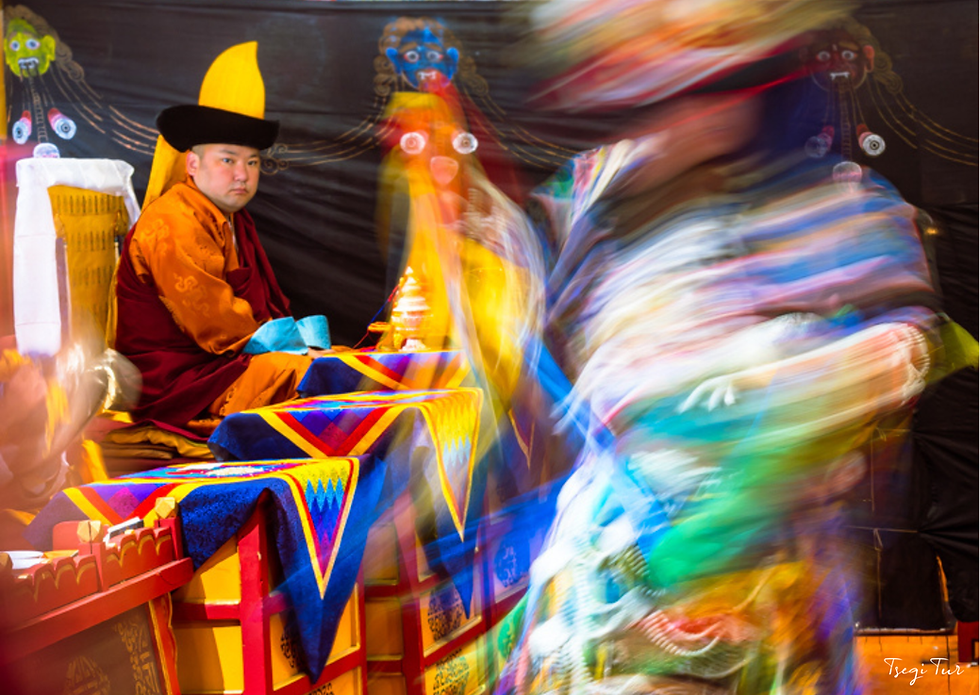
A monk sits in deep focus as the vibrant, blurred motion of a masked deity sweeps through the sacred space a breathtaking glimpse into the living energy of the Tsam ceremony. Far from a performance, this is a moment where human identity fades to let the divine take over.
If you pull back the heavy fabric curtain and step into the courtyard of Zuun Khuree Dashchoilin Monastery in the heat of late summer, the modern roar of Ulaanbaatar completely drops away. Your senses are hit first by the smell thick, sweet, resinous smoke from burning juniper needles clearing the air. Then comes a sound that you feel in your ribs before you actually hear it. The low, ground shaking rattle of the ikh buree (grand copper trumpets), paired with the steady clash of brass cymbals.
Suddenly, the courtyard isn’t just a patch of earth between wooden, ger-shaped temples anymore. It becomes a crossroads where humans and the divine stand face-to-face.
Figures step out into the bright sunlight wearing massive, hand-painted papier-mâché masks and heavy silk robes that shimmer as they move. They begin a slow, rhythmic, stomping circle. If you look closely at the eyes of the dancers through the tiny slits in the masks, you won’t see actors trying to entertain a crowd. You will see young monks and senior lamas who have spent months in silent meditation, fasting, and chanting, working to completely empty out their own egos. To the community watching in hushed silence, these men have temporarily stepped aside so that the ancient protector deities can take over their bodies to clear out the city's bad karma, sickness, and misfortune.
What makes standing in this specific courtyard so incredible is that it almost didn't survive. Go back to the 1930s, and this entire spiritual heart of Mongolia was violently silenced by communist purges. Temples were torn down, sacred books were burned, and the massive, beautifully terrifying Tsam masks were smashed or hidden away in secret attics. For decades, the dances were completely banned.
But a tradition like this is stubborn. In 1990, when Mongolia reclaimed its democracy, the community came together to rebuild Dashchoilin. By 2003, old lamas who still remembered the steps teamed up with young artisans to recreate the heavy costumes and masks from memory. Today, Dashchoilin is the only active monastery in the entire capital that still performs the full, multi-day Jakhār Tsam ritual every single year right on its own historical grounds. It’s not a heritage show put on for tourists; it’s a living, breathing neighborhood service.
As the afternoon goes on, the tension builds to a crescendo. The dancers focus all the negative energy, bad luck, and spiritual roadblocks of the past year into the Sor—a tall, pyramid-shaped effigy made of dough and straw. In a powerful, cathartic finale, the monks carry this structure outside the monastery gates and cast it into a roaring bonfire, turning a year’s worth of collective heavy energy into ash.
Because this is a real, functioning religious ceremony, it asks something different from you than a standard vacation stop. There are no grandstands or tickets. Space is tight, and you find yourself standing shoulder-to-shoulder with local grandmothers holding prayer beads and young families who woke up at dawn just to get a spot. You’re asked to sit or stand in quiet respect, keeping a mindful distance from the lamas and their sacred instruments.
To stand in the swirling dust of Dashchoilin during the Tsam is to feel the thin line between the past and the present snap. Old Mongolian tradition says that just letting those massive sound waves from the trumpets wash over you cleanses your spirit for the entire year ahead. It’s a beautiful reminder of what travel is supposed to feel like, stepping off the beaten path not just to look at a culture through a camera lens, but to quietly sit with a community that has fought with everything they have to keep their soul alive.


Comments